Hope, Connection and Reflection

Ambrose Early Years Education Conference is fast approaching, and this year’s theme is Hope, Reflection, and Connection.

Hope towards optimism and possibility, both in our work with children and families, and in our own professional development.

“In the heart of each person, hope dwells as the desire and expectation of good things to come, despite our not knowing what the future will bring.” Pope Francis

These words resonate in the context of early childhood education, where hope is foundational to our work with children, families, and colleagues. Hope aligns with the spirit of National Reconciliation Week, which calls us to “Bridge Now to Next,” building connections and laying the foundation for a future filled with understanding, healing, and shared growth. Hope to inspire positive change and deepen relationships for the benefit of all.

The Power of Connection in Early Childhood Education

Connection is not just about physical proximity, it is about creating relationships that are meaningful, intentional, and supportive. As we work with children, families, and colleagues, it is the relationships that we build and nurture that provide the foundation for learning and growth.

In her book “Culture of Agency: Fostering Engagement, Empowerment, Identity and Belonging in Early Years,” Lisa Burman writes:

“When adults have a strong sense of ourselves in a group…we are more likely to use our agency to fully participate. The same can be said for children. Trust builds the security they need to feel safe to initiate their learning… This creates an emotionally safe environment where children’s agentive drive takes full flight.”

In the context of early childhood, connection is key to creating an environment where both adults and children feel empowered, safe, and inspired to engage in meaningful learning experiences.

Reflection as a Path to Excellence

Critical Reflection is central to the concept of Exceeding themes within the National Quality Framework. Reflection allows educators to deepen their practice, examine their own biases, and engage in continuous improvement. When we reflect, we open ourselves to new ideas and practices, and ultimately, to better supporting the children we work with.

Carla Rinaldi, quoted in Edwards, Gandini, and Foman (1993), challenges us to see ourselves as researchers, saying: “When teachers make listening and documentation central to their practice, they transform themselves into researchers… Only searching and researching are guaranteed to lead us to that which is new, that which moves us forward.”

It is through this process that we continually grow, discovering innovative ways to support children’s development. Reflection is not just about looking back—it is a forward-looking process that shapes the way we approach our work, refine our practices, and create environments of hope, trust, and connection.

Hope calls us to embrace an attitude of optimism and possibility, both in our work with children and in our own professional development. When we build strong, trusting connections with those around us, we create a space where learning, growth, and hope can flourish. And through reflection, we continue to grow in our practice, ensuring that we are always moving forward in ways that benefit the children, families, and communities we serve.

Grows and Glows

In our practices in early childhood education at Ambrose Early Years and Education, it’s often the seemingly simple yet profound insights that spark transformation. What may appear evident to some might be a revelation to others, underscoring the importance of sharing knowledge and experiences within the community and beyond.

At the start of our Early Years Education leadership meeting, which includes Directors and support team members, there is a ritual of sharing. Each participant shares a ‘Glow’—something they or their team are proud of within their early learning service. This is followed by a ‘Grow’—an area they or their team wish to explore further or develop, whether due to interest or as a response to a current challenge. 

I cannot remember where I first encountered this ritual, but a Google search reveals it is a common feedback strategy teachers use to direct student learning and inquiry. This recollection reminds me why I found it appealing—it fosters learning and inquiry and offers numerous other benefits. 

In early learning services, we work to support children’s growth and development, supporting their inquiries and curiosities. The teacher’s role is not to provide direct answers to children’s inquiries and wonderings, but to scaffold their wonderings by providing safe environments to extend their interests and guide their discoveries about the world around them. This same investigative process should be encouraged and replicated with teachers and leaders in early childhood as well. This practice supports collaborative leadership, which is a key principle in the Early Years Learning Framework, (2.0)

Children’s learning, development and wellbeing is optimised when educators communicate and share ideas and views about improving practice. Collaborative leadership and teamwork support a culture of peer mentoring and shared learning where all team members contribute to each other’s professional learning and growth for high quality programs for children in early childhood settings.”

The glows and grows ritual have provided insights into what is happening for individuals in their services. It has been helpful to identify shared challenges across services and to provide support, sometimes just via a listening ear, and safe space, building a sense of belonging to the team. Helping to create psychologically safe environments where ideas can be shared and shared learning supports growth and change. Pelo & Carter (2018) in their book “From teaching to thinking: A pedagogy for reimagining our work” highlight this imperative to create a culture of inquiry, not only for children, but for teachers as well.

We believe that educators – like children – have a vast capacity for deep dives of mind, heart and spirit….their work is challenging and exhilarating, and demands their full intellectual and emotional attention. Educators deserve – and are sustained by professional learning that strengthens their development as thinkers, researchers, innovators and constructors of knowledge.”

Our Early years Education leadership meetings, provide opportunities to build communities of practice, helping to build a positive, psychologically safe learning culture.

The Grows and Glows sharing has inspired a further exploration across our services in a variety of areas including the establishment of a wellbeing network group; the development and exploration of practices to support emotional regulation with children and teachers; and the sharing of settling in strategies to support the building of relationships with families.

Too often, meetings can be overwhelming and filled with information delivered with little opportunity for individual sharing. Meetings should also be supporting the creation of a positive team culture where experiences are shared and discussions support creative thinking to overcome challenges and plan for innovative solutions, providing a positive environment for people to flourish. This supports quality outcomes for children and the practice is supported as an exceeding theme in the National Quality standards as outlined in guide to the national quality framework standard 4.2.

Collaborative leadership and teamwork are founded on professional and respectful conversations about practice. Educators respect and engage with different ways of thinking and working as a team to critically reflect on practice. When educators communicate effectively and share ideas about practice, children’s learning, development and wellbeing is optimised (Guide to NQF – Standard 4.2, Professionalism”)

Providing a safe sharing environment for the sharing of experiences which includes challenges faced, supports the building of a positive culture where ideas can be generated to overcome obstacles, as well as sharing ideas across settings to support positive outcomes. Sometimes what is obvious to you is amazing to others. What others may be facing as a challenge, you may have already worked through and can provide insight to overcome perceived obstacles.

Making popcorn

I have been focusing on approaching tasks more slowly. To be more responsive and less reactive. To pause and give space for thoughts to develop over time.

Slowing down can be a challenge, but a very useful strategy, particularly when seeking to reflect and consider the most appropriate response to complex situations, as well as nurturing the opportunity for critical reflection.

I have sought to put this into practice throughout various ways including:

  • Delaying responding to an email immediately (as is my usual way.) Sometimes giving this a few hours which gives me opportunity to provide a more considered response.
  • Focusing on active listening, rather than listening to respond. Pausing and listening more.
  • Methodically working through a weekly task list and giving myself permission to use the full week to complete this.
  • Maintaining my rituals including daily walks and exercising (rather than pushing these aside when feeling overwhelmed.)

I’m still a ‘work in progress’ to slow down, but I have noticed a clarity in thinking by making these small adjustments and I’m completing more tasks in the same amount of time. In his podcast “Two bits of optimism with Brene Brown and Adam Grant” Simon Sinek describes how we need to let the brain wander to provide opportunity for creativity.

Allow the limbic brain to do its thing… things that gets in the way of people being creative and not allowing the limbic brain to wander… you are on the phone in the bathroom, running, all the time- you don’t give the brain time to wander allow the brain to popcorn new ideas. You cannot predict or force creative ideas, but you can facilitate them.

I am drawn to the idea of allowing the brain to wander and to popcorn new ideas. Space and time are required to nurture the creative process, working through challenges, providing space for ideas to percolate and develop over time. Slowing down our reactions and judgements supports this opportunity for processing and reflection.

This made me think of slow pedagogy in the early years which embraces valuing the present to attend to children’s interests, supporting their investigations and curiosities as they are engaged in their play. Adults need this slow pedagogy as well, to reflect, ponder and to be.

I like the idea of planning maker days and manager days which Simon also discussed in his podcast. Manager days are for ‘the stuff that has to be done,’ the operational tasks that are required. Equally important are the opportunities for ‘maker days.’ Time to dream, create, ideate, innovate – to improve. I see this as essential in our work in early childhood.

Critical reflection and ongoing professional learning are welcomed additions to the updated Early Years Learning Framework (Version 2.0, 2022.) Slowing down and providing space for ideas to develop, to reflect and consider options before planning next steps supports critical reflection.

Reflection involves educators thinking intentionally about their own and others’ practices, with certain aims or goals in mind. Critical reflection is a meaning-making process that involves a deeper level of thinking and evaluation.(EYLF, 2022, page 18.)

Slowing down and creating space and time for reflection supports the opportunity for a deeper level of thinking. I have often heard people share that their best ideas come to them when they are in the shower or going for a walk. Disconnection from the everyday provides space for the brain to ‘popcorn new ideas.’ It’s time to embrace slowing down.

What does leadership in early childhood look like?

Life would be boring if we all had the same opinions and agreed on everything. In my approach to leadership, a big part of me seeks to create harmony to support positive experiences and outcomes for all, aligning with an affiliative leadership style. But positive experiences and outcomes for all cannot always co-exist in leadership – we cannot always make everyone happy all the time.

Leadership in early childhood is supported by a shared vision of our “why.” Key to this is the environment we are seeking to create for the children, families, teachers and educators who are a part of our learning communities, as well as the wider communities which they are a part of.

In preparation for this blog reflection, I reflected upon my why, reading my past blogs (What will be in 2023? and Reflecting, Connecting and Practising) as a reminder for my purpose.

“Early childhood services provide space and time to wonder, create, innovate for all – children, families and teachers as citizens of these communities, connecting and sharing ideas for individuals as they ‘come into being‘ with each other.” What will be in 2023?

Daniel Goleman’s article (Leadership that gets results, Daniel Goleman, 2000, Harvard Business Review) was recently shared with me (thank you Catharine Hydon,) prompting me to reflect on my style of leadership. Reading this brought me to an ‘Aha’ moment. Reflecting on my experience, I can see that in early childhood, the affiliative leadership style has been my dominant approach and that I needed to increase the frequency of using other styles.

The affiliative style is very effective, for example when working through Covid, relationship building, and support were key to providing a sense of security in an unpredictable environment. Relationships are important, however there is not always going to be harmony and agreement. The affiliative leadership style should be used along with other styles which can include pacesetting, coaching, authoritative and democratic.

For example, combining pacesetting with the affiliative style of leadership could further support quality practices and outcomes by facilitating the setting of a shared vision (our why) for improved quality standards and self directed team members.

The Early Childhood Australia Code of Ethics provides a solid ethical leadership framework for our ‘why’ and supports the consideration of multiple perspectives, as is seen in the core principles and responsibilities.

Professionals who adhere to this Code of Ethics act in the best interests of all children and work collectively to ensure that every child is thriving and learning.” (ECA Code of Ethics, Vision)

“In relation to the profession I will take responsibility for articulating my professional values, knowledge and practice and the positive contribution our profession makes to society…..In relation to colleagues I will, use constructive processes to address differences of opinion in order to negotiate shared perspectives and actions.” (ECA Code of Ethics, Commitments to Action)

As I write this post, I am halfway through the CELA Micro credential Leadership Training which is supported through Mentor workshops also provided by CELA. This experience has highlighted the importance for a focus on leadership in early childhood for our future leaders in the sector. Historically, leadership training in early childhood has been sparse and unclear. A focus on the development of our future leaders and what leadership in early childhood looks like, will support positive outcomes for all.

Within teams, there will be differences of opinion. Key to leadership in early childhood is the shared vision, supported through professional and respectful discussions about responsibilities and quality improvement. This can be supported through the adoption of a combination leadership styles which may be based on a combination of affiliative, pacesetting, coaching, authoritative and democratic styles.

What will be in 2023?

“You are the only you there ever has been or ever will be. You have so much to offer……Wherever you go, take your hopes, pack your dreams, and never forget – it is on journeys that discoveries are made.” (Maybe: A Story about the endless potential in all of us, Kobi Yamada, 2019.)

This inspiring quote from the beautiful children’s book prompted my reflection on the infinite potential that each year brings for hopes, dreams, journeys and discoveries in early childhood.

Maybe‘ was shared with all our Ambrose Early Years Education teams last year as part of our end of year reflection and celebration. This was a valuable reminder of the important role of early childhood services to build communities that support the potential of the children, families and early childhood educators and teachers.

I am excited when thinking about the year ahead for early childhood – full of infinite potential to navigate as families, children, teachers and educators are welcomed into early childhood communities. Previously, I have set a word intention for the year ahead to focus upon. This year my one word is Effect.

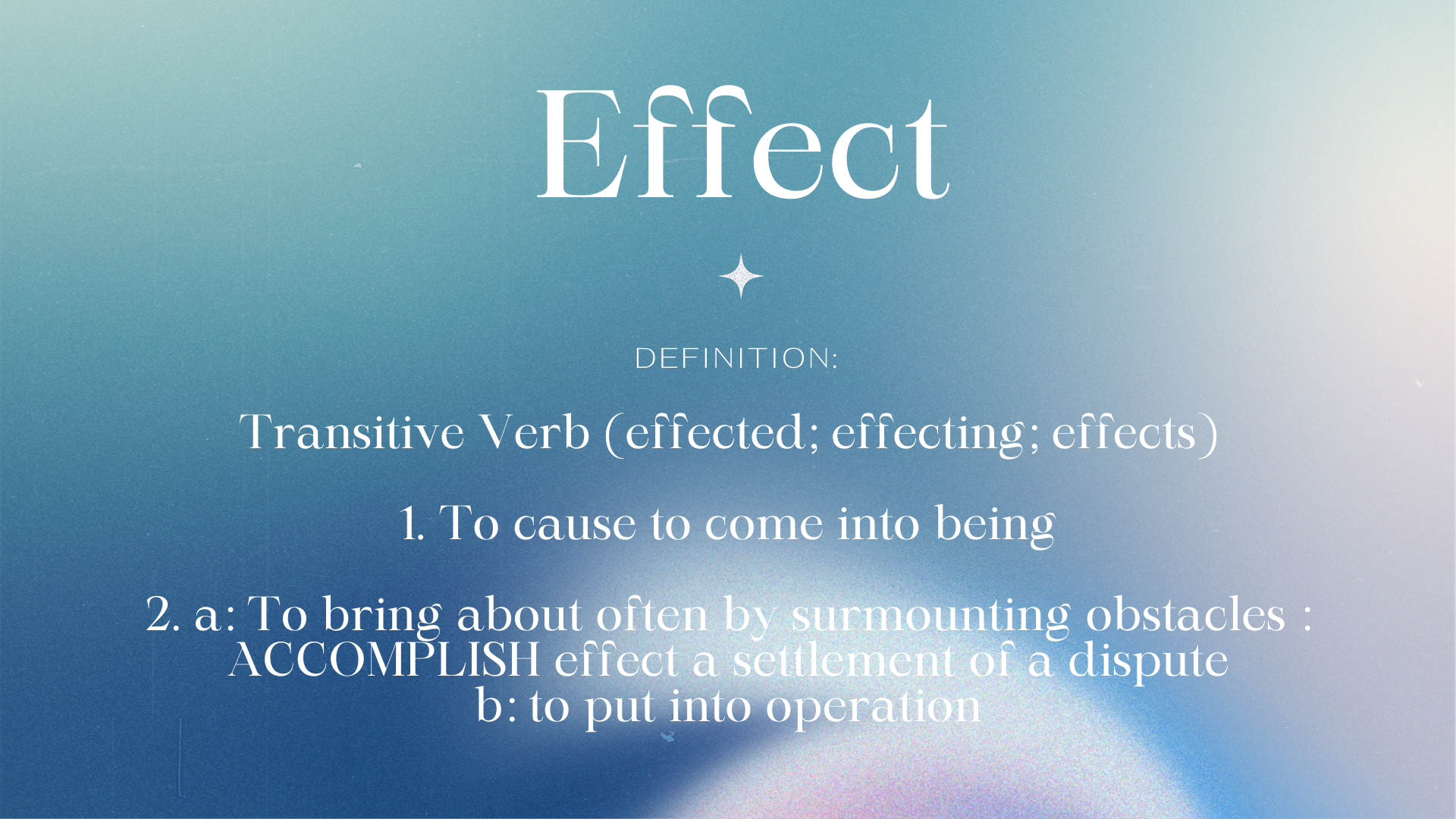
“Effect” Definition Meriam Webster Online Dictionary.
What does this mean for me in 2023?

1. to cause, to come into being.” To have a positive effect on others, being an agent for children’s rights, welcoming and partnering with families and children, strengthening early childhood and school communities.

2a. To bring about (effect) often by surmounting obstacles: Accomplish effect the settlement of a dispute.” To create opportunities and engagement in professional dialogues and to build communities of practice. These dialogues should provide the opportunity to listen to alternative perspectives and to plan together how to surmount obstacles.

“2b. To put into operation.” The NSW Early Years Commitment and federal commitment to the Early Years Summit presents opportunity to put into operation (effect) support structures and reform for early childhood communities to be strengthened and extended, opening opportunities for universally accessible early learning.

In Reimagining Early Childhood: The inspiration of Reggio Emilia education principles in South Australia (2013.) Carla Rinaldi writes

An educating community is a community, a city, where early childhood centres and schools, play a key and crucial role. The role they play is not only for learning formal knowledge by children, but for learning values on which the community itself bases its identity and can reflect on the moral aspect of becoming a citizen and a worker in, and of, a society. A school that gives time to all expects time to be given by all to the society.

Early childhood services provide space and time to wonder, create, innovate for all – children, families and teachers as citizens of these communities, connecting and sharing ideas for individuals as they ‘come into being‘ with each other.

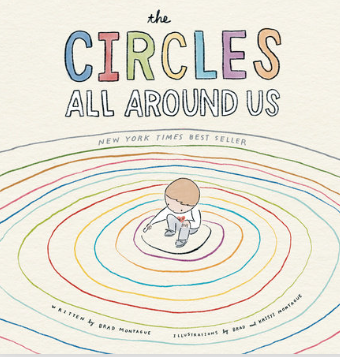
“In the circles all around us everywhere that we all go there’s a difference we can make and a love we can all show. As our circles grow and grow and we watch them wonder-eyed…remember the first circle started with just the love you hold inside.” Circles, Brad Montague (2021)

Through extending our ‘circles’ and building communities, early childhood services play an integral role to support curiosity and wonder in children’s play and inquiries, to provide avenues of support and welcoming spaces for families, as well as opportunities for building professional dialogues and opportunities for early childhood professionals.

The effect of this will be exciting to watch.

Opening Doors

Last weekend I spent time with some close friends who I met at a former workplace where I first became a Director 20 years ago. Spending time with them brought back some wonderful memories and prompted me to reflect on my experiences and learnings from the last 25 years working in the early childhood sector.

One of these friends (I will call her Alice to protect her privacy) was a previous Director of the service where I first worked as Director. She was a wonderful support and had a wealth of experience that I was fortunate to learn from. Spending time with Alice last weekend reminded me of an experience at a service 20 years ago which taught me a lot about what is needed in teams for them to work collaboratively.

Alice worked at the service part time. She has a vibrant personality and upon arrival there was a positive energy that she would bring with her each day. Each morning Alice would greet everyone as she walked through the service. Checking in with everyone and greeting them and sharing her positive energy.

Alice’s daily morning ritual included a visit to the kitchen to say hello to Lyn who worked as Cook for the service. Alice would spend time with Lyn to check in to say hello and to make her morning coffee whilst catching up with Lyn about the morning (as Lyn helped to open the service each day.)

A short while after starting at that service with Alice, there was an interaction between Alice and Lyn which I still remember to this day. What might be viewed as minor, it demonstrated to me that to build positive relationships, there needs to be open communication. This supports the building of trust and to what I now understand to be ‘psychological safety’ in the workplace.

As mentioned, this interaction occurred a couple of months after I started at the service. It was during Alice’s morning ritual of greeting each team member, she had made her way to the kitchen to say hello to Lyn. I observed the entire interaction from outside my office where I was sitting with a small group of children in construction corner, the kitchen was open plan and so I saw the event unfold.

After having a short chat and leaving the kitchen one morning, Alice walked away and towards the room next door. The chat seemed to be no different to any other morning chat. It was positive and lively. Alice closed the kitchen door and locked this to prevent children accessing the kitchen and walked towards the room next door.

Lyn began to shake her head and frowned slightly, I watched from a distance. Alice looked like she had forgotten something and went back towards the kitchen. She saw Lyn shaking her head and frowning and asked ‘What’s wrong Lyn? Are you ok?’

Lyn paused, looked at Alice took a deep breath and responded exasperatingly, ‘ Every morning when you visit me Alice, you open all the cupboard doors and leave them open. Each time after you leave I need to close them all, otherwise I walk into them and there’s not much space in the kitchen!’

Alice looked shocked, she responded,’ I had no idea. Do I really do that each time I’m in the kitchen? Lyn nodded her head.

Alice asked for clarification,’ Do I do this every morning?’

Lyn confirmed that she did. Alice was very apologetic, ‘I’m so sorry.’ Then questioned Lyn ‘Why didn’t you tell me earlier?’

Lyn seemed slightly embarrassed, quietly saying, ‘It’s ok Alice, I like you coming in.‘ To which Alice responded, ‘But it’s not ok and I had no idea that I did that.’

Alice apologised and admitted, she was not aware that as well as greeting everyone each day, her morning ritual included opening the cupboards every day in the kitchen, which impacted on Lyn’s experience in the kitchen.

From that day, Alice remembered to close the cupboards in the kitchen and Lyn and Alice remained on positive terms for the remainder of their time working together. There may have been other challenges that arose, but these were talked through and resolved.

I heard Alice share this story to many other people she worked with, using this experience as an example of how we often don’t always realise our own behaviours and their impact. Also highlighting the importance of speaking up in a workplace to support a positive team culture.

I learnt a lot from watching Alice’s interactions with the team and the positive relationships she had with each team member. To this day it has supported my understanding of the importance of building positive relationships in a workplace to support positive outcomes for educators, families and the children. Relationships are built over time through regular opportunities for connection and the building of trust.

If “location, location, location” describes what is most important in real estate, then the mantra “relationships, relationships, relationships” can be applied to early childhood classrooms. Relationships are key to early learning. Kate Reed, 2014.

Positive relationships between team members in early childhood supports quality outcomes for children and families. At present, I am currently exploring the importance of Psychological safety for early childhood settings. I was introduced to the term Psychological safety through Amy Edmondson’s Ted Talk ” ‘Building a psychologically safe workplace.’ Amy describes psychological safety in a workplace being demonstrated when individuals having the courage to have a voice and speak up with concerns or questions and to admit to mistakes. It is not always easy and takes time, requiring the formation of trusting relationships amongst team members.

I look forward to sharing my wonderings and reflections on this in future blog posts.

Reflecting, Connecting and Practising

I began 2020 with the aim ‘to connect’ as part of my list of “20 for 2020” in my first blog post for 2020 (which can be read in my first blog for the year To connect and disconnect.) My ‘word’ for 2020 was connection.

Like always, life doesn’t go as planned and with the arrival of COVID and its implications, it became more of a challenge to follow my list and to be able to connect. How could I connect when social distancing was required?

As an early learning service, St Luke’s Catholic Early Learning Centre (CELC) remained open throughout the COVID lockdown period. From 23 March to June, the number of children attending St Luke’s CELC decreased significantly. Teachers and educators adapted their practises, planning and sharing home based learning experiences for the children and families to engage in at home. We also continued to provide a safe, nurturing connection for the children and families who maintained their attendance at St Luke’s CELC. A ‘silver lining’ benefit at this time was the recognition of the value and essential requirement that early years education has for society (as discussed in my blog post Early Learning Matters)

We used this time as a team to reflect on our practises, closely examining the Early Childhood Australia Code of Ethics to formulate our own Mission statement (more detail in A new Day Rising.)

As a team, we continued to maintain our connection as together we were guided by our shared values, vision and sense of purpose.

Since we opened in February 2018, the children and teachers from St Luke’s CELC have been connected through visits to Early Stage One to support the children’s sense of belonging to the wider school community. A key element to our experience at St Luke’s CELC is our connection to the school community. Whilst we were able to visit Early Stage one in term 3, unfortunately these visits were unable to continue due to COVID protocols. This meant an adaptation of our practises.

As we were unable to bring the children to Early Stage one for visits, during term 4, Early Stage one (ES1) teachers visited our environment to meet the children instead. This was a wonderful opportunity for the ES1 teachers to meet and get to know the children in their own environment where the children are familiar and most comfortable.

On day one of these visits, I discussed these with Jennifer (one of the ES1 teachers.) She agreed that there was a noticeable increased level of comfort in the children as they were in a familiar environment of the CELC (as compared to their school visits and first meeting at school interview.) We agreed that ES1 teachers visiting the CELC environment supported the children to form connections and relationships with their new teachers which will provide a continuity of experience for the new year. The children were encouraged to ask questions, expressing their thoughts about starting school. This is further supported through the sharing of information across both settings (the CELC and the school) to support children’s continuity of learning.

Providing opportunities for the children to connect and form relationships in an environment where they feel they belong provides a solid foundation, supporting them holistically in their growth and development.

The quality of ground in which a tree is established significantly affects its future growth.

Unearthing Why, 2015 , Britt & McLachlan.

As we get closer to the end of term, I am preparing for a change of direction in my journey with St Luke’s. I am moving into the role of Senior Manager Early Years Education for Catholic Diocese of Parramatta Services Limited (CDPSL.) Moving into a new role was an enormously challenging decision to make as I have absolutely loved working within a professional learning community which is supportive and caring of all of its members.

My experiences at St Luke’s Catholic College have positively influenced my professional growth and learning. I have learnt the value of the need to have a growth mindset, to engage in critical reflection of ones self to continue to grow and develop, to build partnerships and connections across all schools of learning ( preschool to high school) as well as the importance of continual professional development.

Thank you Greg Miller for your strong leadership and authentic demonstration of valuing the preschool years for children’s growth and learning, providing a solid foundation for their participation in the St Luke’s School learning community. Your guidance and support is greatly appreciated. It has been a privilege to work with you.

I would also like to say thank you to my colleagues on the St Luke’s Leadership team. Julie Atkins, Kelly Bauer, Anne Clark and Michelle O’Leary. It was a pleasure to work alongside you all. I will miss our weekly leadership meetings.

Thank you to my wonderful team at St Luke’s CELC, who continue to demonstrate professionalism whilst striving to implement high quality teaching and care for the children and families of the community by engaging in professional development and self reflection.

In my new role, I will ‘not be a stranger’ to St Luke’s CELC as I will continue to work with the CELC, albeit not on a daily basis. Why am I leaving you may ask? In my new role I am seeking to continue to continue to advocate for the value of early years education in providing a solid foundation for children, building supportive learning communities. Early childhood experiences shapes children’s trajectories for their futures. Advocacy in early childhood is essential to ensure quality outcomes for the children, shaping their future and society as a whole.

And so I leave St Luke’s learning community with an increased understanding of the positive outcomes and wonderful benefits of a preschool to post school learning community, where children and families are supported in their learning and growth. Where a thriving learning community of teachers across all school settings from preschool to primary school to high school is united with a shared vision to ‘nurture faith-filled, curious children to become creative contributors and innovative problem solvers for a changing world.’

For me, becoming isn’t about arriving somewhere or achieving a certain aim. I see it instead as forward motion, a means of evolving, a way to reach continuously toward a better self. The journey doesn’t end

Michelle Obama, Becoming

Critical Reflection, Continuity of learning and Professional Practice

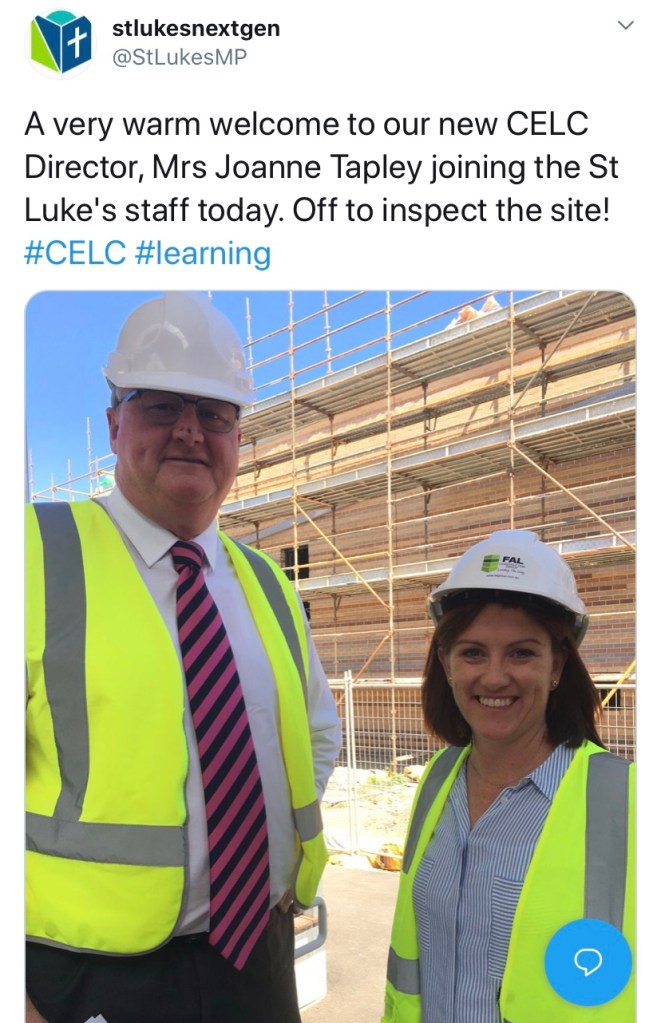
Three years ago on September 18 2019 I started at St Luke’s Catholic College as Director of the Catholic Early Learning Centre (CELC) and what a wonderful journey it has been!

Tweet from 18 September 2017.

This prompted me to reflect on my experiences during this time and some things that have been reaffirmed and/or I have learnt along the way.

The Importance of Critical Reflection

“Blog weeks’ at St Luke’s can stir feelings of discomfort as I ponder on what to write and to share.  What have I been doing that a wider audience may find interesting?

I enjoy reading my colleagues’ blogs to learn about their experiences across the school setting from the CELC to Stage 4. Further to this, when writing a blog, I quite often come to a deeper level of understanding for myself on what I have been grappling with. Critical reflection is not easy!

Since we opened in February 2018 the CELC team have continually reflected on elements of the day, on our planning and programming, on our groupings, documentation formats and routines.  It is embedded in our practices.

Reflections over time have seen positive changes along the way and new learnings. Most recently this occurred via the introduction of new room groupings at the CELC and has been very well received.

Though challenging and uncomfortable at times, critical reflection has supported our efforts to sustain our shared vision and purpose on how to implement this effectively.  Critical reflection is required and needs to continue as a means to building a professional culture of collaboration and inquiry.

Continuity of experience

Continuity of experience from their early years setting to their school setting promotes positive outcomes for children and their families.

Connections formed between St Luke’s Catholic Early Learning Centre (CELC) and Kindergarten (Early Stage One) have supported the continuity of experience for children who continue their learning into Early Stage one the following year.

Continuity of experience for the children, connections between the CELC and school setting and collaboration with families is supporting a positive transition for children as they move from the CELC to school.

We have seen this in action!

Children and families are introduced to St Luke’s Pillars of learning at the CELC. From their experiences at the CELC, the children are practising and developing the St Luke’s Pillars of Learning including relating with others, managing self, creative thinking and to communicate and collaborate. This helps to provide a positive transition via a continuity of experience in their learning. There is not a ‘push down’ of academic expectations for the children at the CELC to be ‘school ready.’  Continuity of experience, connections and collaboration is supporting a positive transition.

Professional practice in Early childhood guides quality outcomes for everyone – teachers, educators, children and families.

This year, I have explored the Early Childhood Australia (ECA) Code of Ethics more closely and used this as a guide for many CELC team meetings. As a team we have used the ECA Code of Ethics to support reflections on our own personal beliefs, our practices and interactions.  

The ECA Code of Ethics has a set of core principles to guide the early childhood sector. It includes key points of reference to guide practices and behaviour of early childhood professionals in relation to children; families; community and society, colleagues and the profession.

Professionalism is demonstrated when management, educators and other staff develop and maintain relationships with each other….. Team collaboration that is based on understanding the expectations and attitudes of team members and build on the strength of each other’s knowledge, help nurture constructive professional relationships.

Guide to the National Quality Framework, ACECQA, 2018, p 215

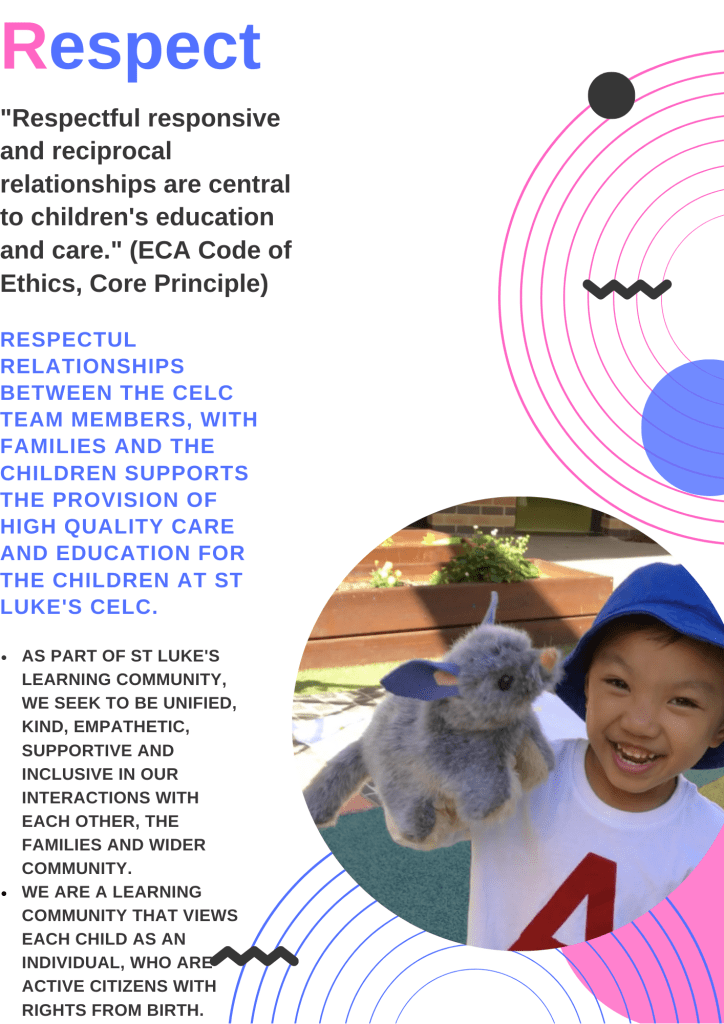
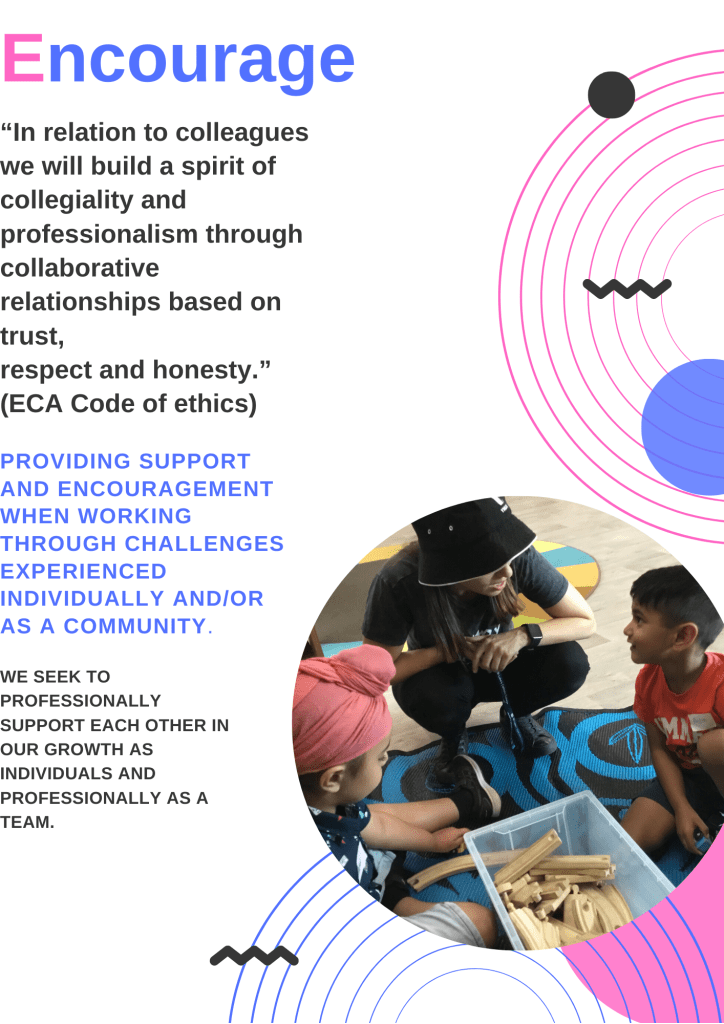
The ECA Code of Ethics has been used as a point of reference to create our own mission statement, applying this to the Catholic Diocese Parramatta Services Limited principles of Respect, Encourage and Care.

High quality early learning environments requires the skills and knowledge of professionals who engage in professional practices that shape the environment, display and encourage professional behaviours, engage in positive interactions which create a positive culture.

When reading over my previous blogs I came across the following which I wrote in December 2017 which still rings true today.

It is inspiring to work alongside a supportive team who are professionally engaged, constantly striving to develop and grow alongside the students they teach.

I have thoroughly enjoyed building a team of passionate teachers and educators, working as part of a school community, being a part of a supportive leadership team, having a wider support network of Directors and being engaged in something I love.

Early Learning Matters

It’s Friday morning at St Luke’s CELC, I walk outside the admin building to be greeted by Josh who has been looking through the window.

“Mrs Tapley, Mrs Tapley!” He said quickly with excitement, pointing inside the door from where I came through.

“Mrs Tapley, the STOP sign!”

I responded affirmatively that the sign he was pointing to was the stop sign that is sometimes used in the children’s play outside particularly when the bikes are in use.

“I need it!” He said determinedly.

“Would you like the Stop sign for your play?” I asked Josh

Josh nodded his head and said, “I need it to stop people” (he gestured the stop signal with his hand. “Before they can go.” (he gestured his other hand to motion the go signal.)

These interactions bring joy to my day. It was a wonderful start to the day with Josh expressing his thoughts to me so confidently. At the same time, I can see his language skills developing as well as his literacy awareness. This was an important reminder to me how early learning matters for children’s wellbeing and their development.  (And so my original nearly complete blog on groupings and reflections was abandoned – but was described perfectly by my colleague here Routines, groupings and transitions which I urge you to read as it is a well written blog reflection about other aspects of our CELC experience.)

Later in the morning, I saw Josh with a small group of children. Josh was in a line with his peers which they had independently formed, whilst their friend Thomas was holding the Stop sign. They were walking along the bike track, as they did this together in line formation, Thomas would at seemingly random moments cease walking and hold up the Stop sign. This would cause Josh and his peers to stop walking. Then Thomas would move the stop sign and gesture for the group to continue walking along the path.

This child initiated experience continued throughout the morning, with the children negotiating and collaborating their roles in the play. Turn taking, role play through imaginative play and problem solving. These observations and interactions are part of my favourite times in my role at St Luke’s Catholic Early Learning Centre as I witness first hand how early learning matters each day and every day.

Ninety percent of children’s brain development occurs in their first five years of life. Early learning for children sets their trajectory for the future.  In a recent article by Sam Crosby, Why childcare must be made free in the Financial Review, he discusses the need for early childhood to be freely accessible to all children.

“ A range of longitudinal studies have shown how high quality, early childhood education develops social competency and emotional well being.” Crosby

A number of other recent articles covering similar themes published in relation to Child Care subsidy discussions and the need for this to be reviewed include The case for free early learning ; Quality childcare can help rebuild economy; Childcare is important for parents but vital for kids – both are under threat

Childcare has traditionally be viewed as an economic policy by governments, supporting parent’s participation in the workforce. Whilst this is a benefit, it needs to be recognised the value that high quality early learning environments provide for children’s well being and development, setting their growth and path for future years.

“All children have preparedness, potential, curiosity and interest in constructing their learning, in engaging in social interaction and in negotiating with everything the environment brings to them.”

(Gandini, 1993, Fundamentals of the Reggio Emilia Approach to Early Childhood Education, Young Children, 49, p 5.)

In their play, the children are learning how to communicate with their peers. Within this communication, they are also developing negotiation and collaborative play skills to guide the direction of their play.  

This was indeed on display between Josh, Thomas and their peers. In their play, children are learning. These moments in play are reminder of how learning occurs in its own time and early learning is not about getting children ready for school, it is about curious children becoming ‘creative contributors and innovative problem solvers.’ Now that has a nice ring to it… ah yes – that is key to our mission and values at St Luke’s Catholic College and guides our practise.

As a ‘next generation Catholic learning community’ St Luke’s Catholic College, Marsden Park has established the ‘new normal’ for preschool to post-school learning. This innovative environment nurtures and grows faith-filled, curious children as critical thinkers and problem solvers.

There does seem to be a growing recognition of the value for quality early learning environments for children. It is not babysitting for parents to attend work, it is not preparing children for school. It is essential for children’s social wellbeing, growth and development.

High quality early learning environments requires the skills and knowledge of professionals, including university trained teachers who have made the choice to work the extra weeks in the year with no school holidays as they have a passion for the important work and role they play in the lives of young children and their families. This also needs to be recognised in the wider community.

I am in the fortunate position where it is recognised that Early Learning Matters as part of St Luke’s learning community . This supports our sense of belonging to the learning community which supports children’s growth over time from preschool to post school.

*Early Learning Matters week 2020 was 3-7 August to raise awareness and understanding of the importance of early learning.

A new day rising

A new day is rising as we emerge in this “COVID safe” world. We have experienced a time in our personal and professional lives unlike any that have occurred before. This has prompted a reflection of policies and our practises that emerged during the COVID-19 pandemic.

The recognition of the essential role of Early Childhood education for families and society has been a positive outcome from the pandemic. This recognition must continue! Early Childhood experiences shape the trajectory for children’s future well-being and education.

“Like it or not, the most important mental and behavioural patterns, once established, are difficult to change once children enter school.”  (Heckman & Wax, 2004.)

At a service level, we have been extremely fortunate at St Luke’s Catholic Early Learning Centre (CELC) being supported to continue our daily operation throughout the pandemic. We have changed and adapted our practises in response to COVID-19 to facilitate the safety and wellbeing of the children, families and teachers. Many of these changes are ‘silver lining’ benefits that we now seek to continue.

Over the last fortnight, as a team, we have critically reflected on our practises to support our planning as we emerge in this new day rising.

To support this critical reflection, we looked at the following

  1. What are the positives that have come from our current situation?
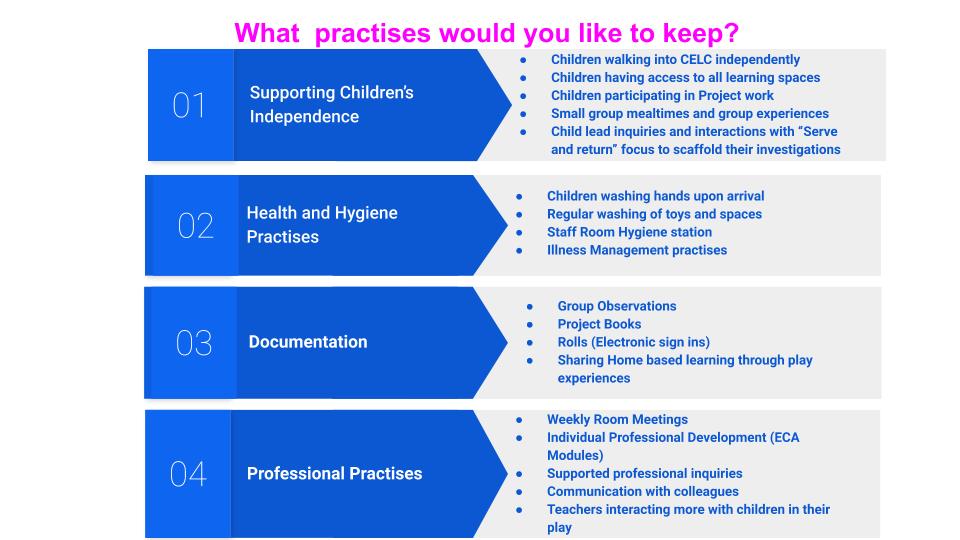
  2. What practises would we like to keep?
  3. What practises would we like to Change?
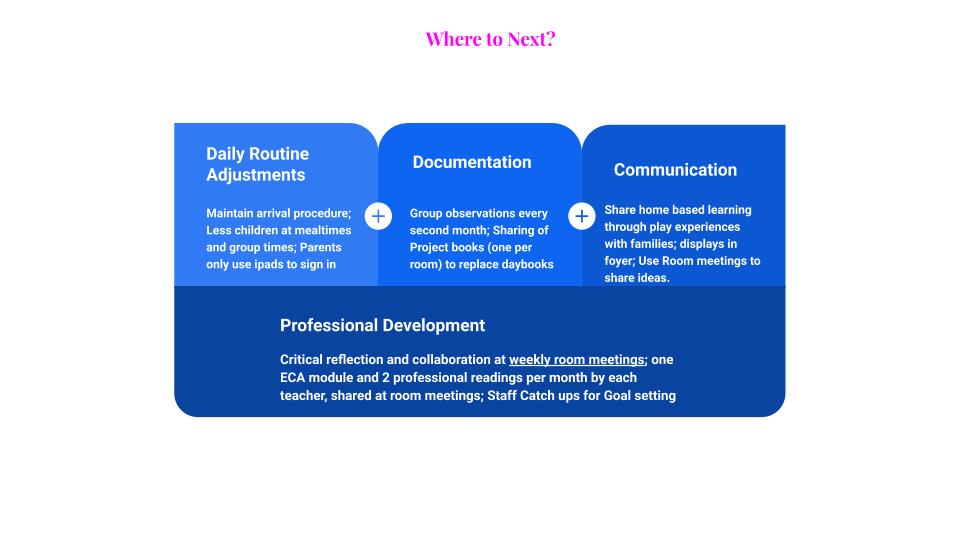
  4. Where to next?


Positive Outcomes

During COVID-19, as a team we developed a mission statement for St Luke’s CELC.  As we have now been open for over 2 years we believed this time provided a valuable opportunity to develop.

“With thoughtfulness and intention, we consider our values and beliefs about the purpose of education: about what kind of people we want to be and the kind of world we want to live in …

Vision integrates imagination, passion, and delighted anticipation of the possible. Vision sets our course…

Who are we as a community? How will we live into our vision? How will we express ourselves?”  

Pelo and Carter, 2019

We reviewed and discussed the Early Childhood Australia Code of Ethics, and sought to apply these to the Catholic Diocese of Parramatta Services Limited principles of Respect, Encourage and Care to our context at St Luke’s CELC.

From this experience, we were reminded of our “Why.” This was used as a touchstone to go back to our purpose and shared vision, binding us as a team in challenging circumstances.

Practises to Keep

Practises to keep can be grouped to the following areas of focus

  • Supporting children’s independence
  • Health and Hygiene Practises
  • Documentation
  • Professional Development

Keep

Children have been encouraged to develop their capability to Manage Self which is a key  St Luke’s Pillar of learning as they walk into the CELC independently each day. This practise will continue due to the social distancing requirements and we are investigating how we will continue this.

An adjustment of practise has resulted in the sharing of home based learning experiences with families. This is a practise we seek to continue as a means to facilitate the continuity of experience between home and the CELC.  We have had a very positive response from families to this change.

Where to Next?

The teachers are exploring different forms of documentation to record observations of children. This has included small group experiences, project investigations and individual observations.  In their small group experiences with the children, we are exploring the use of project books to  record children’s questions, wonderings and explorations.

We are continuing to explore this as a means of documentation to collect information, analyse and plan this as part of the planning cycle.

NextIn conclusion, I am sharing a quote from Loris Malaguzzi when describing the role of the teacher and their impact on children’s trajectories.  It is a reminder of our important role as we continue to critically reflect on our practises in response to our ever changing contexts.

“Each one of us needs to have curiosity, and we need to be able to try something new based on the ideas that we collect from the children as they go along. Life has to be somewhat agitated and upset, a bit restless, somewhat unknown. As life flows with the thoughts of the children, we need to be open, we need to change our ideas; we need to be comfortable with the restless nature of life….

What we want to do is activate within children the desire and will and great pleasure that comes from being the authors of their own learning. Children have a right to a good school — a good building, good teachers, right time, good activities. This is the right of ALL children.”

Reference: Your Image of the Child: Where Teaching Begins” by Loris Malaguzzi