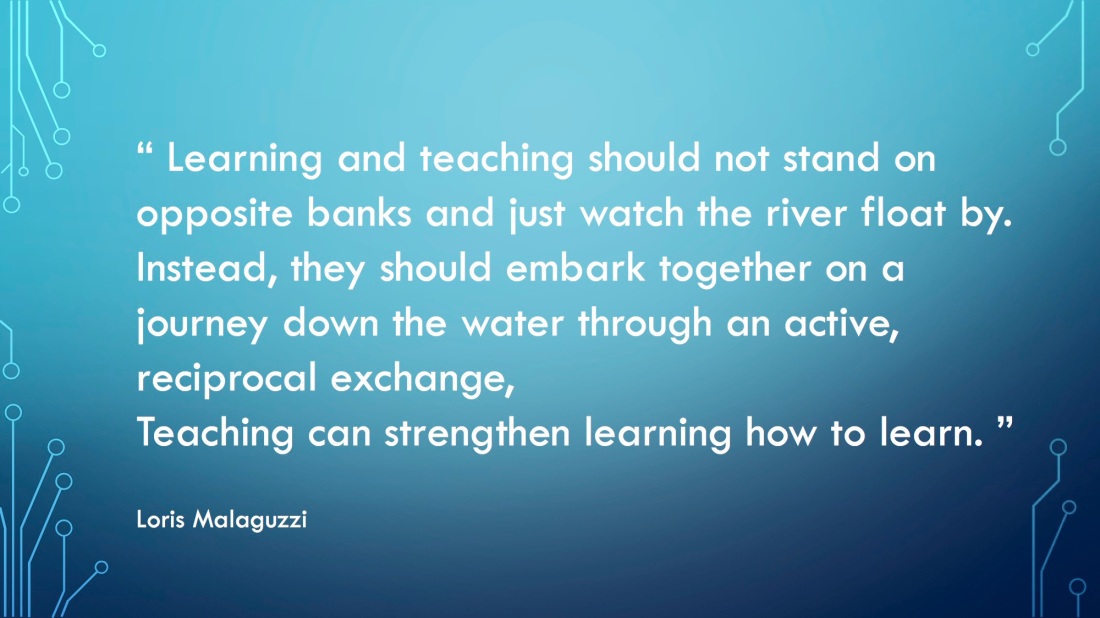
“Teaching is mostly listening. Learning is mostly talking”

” Teaching is mostly listening. Learning is mostly talking.”

I was introduced to this quote by Alise Shafer Ivey at a conference I recently attended “The changing face of education: Early learning in the 21st Century.”

The two day conference provoked many discussions and reflections on children’s experiences in early childhood education today. The sharing of experiences and thoughts from the conference was a great opportunity for me to reflect on my own practises and experiences at St Luke’s.

At St Luke’s CELC we encourage children to be actively involved in their learning through hands on play based experiences. Small group experiences and open plan learning environments facilitate children’s active involvement in learning. But are we (the teachers) mostly listening (to the children) and are the children mostly talking?

This is a question I am seeking to explore further with my colleagues.

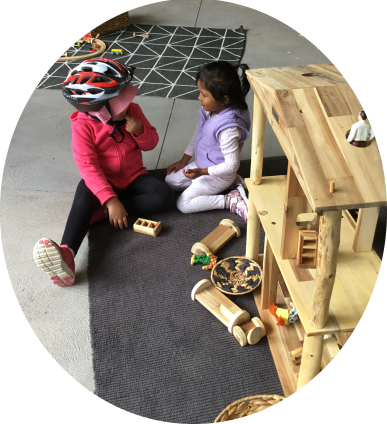
In her presentation, Alise highlighted the importance of nurturing children’s creative thoughts as they build their own theories about the world around them. Children build their theories in learning via their interactions with places, people and materials.

IMG_1120

The children are freely exploring the materials in the environment at St Luke’s and are  building their own learning theories, but are we always listening to these? Are we empowering the children to build these theories over time without telling them the answers?

When children are playing they are building their learning theories, we as teachers have a role to listen to children’s ideas and to scaffold their investigative learning. This can be quite the challenge at times not to tell children the correct answers when they are are building theories on the world around them, but yet this is how they learn best, exploring the qualities of materials they are exploring, investigating how they operate.

Creativity in their play supports the development of children’s divergent thinking for the later years in school and post school. Teachers play a vital role to scaffold children’s learning, facilitating children’s creative thoughts to shape their learning theories. In this way, the teacher’s role is to listen while the children explore and investigate, expressing their learning theories along the way.

This leads me to revisit Louis Malaguzzi’s poem “The hundred languages of children” (that I have previously quoted in my blogs). He eloquently describes children’s languages of learning about the world around them and this is expressed in hundreds of ways.

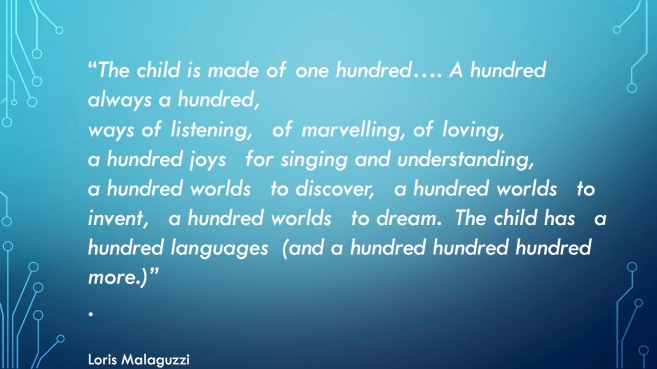
“A hundred ways of thinking, playing and speaking… A hundred ways of listening, of marvelling, of loving, a hundred joys for singing and understanding, a hundred worlds to discover, a hundred worlds to invent, a hundred worlds to dream.”

Through children’s play, we as teachers have a role to listen to children’s ideas. They are building theories in their learning.


Early Stage One Visits, Self Regulation, Dispositions for Learning

IMG_1284.png

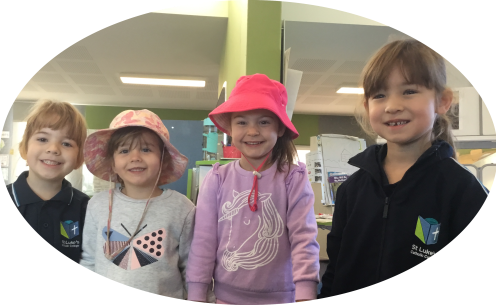
As part of their learning journey at St Luke’s the children at the Catholic Early Learning Centre (CELC) have begun to visit the Early Stage One Learning spaces. This has been a wonderful opportunity to support the children’s continuity of experience at St Luke’s Catholic College.

These visits have been during  Early Stage One’s “Developmental Play” which occurs  each day. The play based setting provides familiar experiences for the CELC children to explore the learning spaces.

After observing the Early Stage one children beginning their day (peer modelling) the children from the CELC selected areas to play and interacted with other children, teachers, the learning space and materials. In their explorations, the children displayed their  developing self regulation and capabilities towards  “Managing Self ” as they begin to recognise their emotions ( St Luke’s Pillars of Learning.)

Self-regulation is an essential skill for children to develop in their early years, providing a foundation for children to develop positive dispositions to learning as they continue along their learning journey.

Self -regulation is how we manage our reactions and behaviour.  It encompasses emotional regulation, attentional regulation (maintaining focus), thinking processes (which includes working memory, inhibition control, mental flexibility) and social behaviours.

In their play in Early Stage one, the children were able to practise these self regulatory behaviours. Developing self regulatory behaviours in the early years provides a foundation for children to develop positive dispositions to learning.

This is particularly important as children continue to develop their capabilities and self regulation in their continuity of learning in the school environment.

IMG_1575

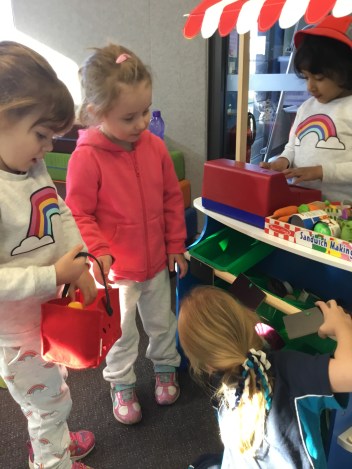
Role play opportunities were set up including a grocery store and Doctors surgery in the learning space. In their role play, many of the children’s emerging self regulatory behaviours were observed during our first week of visits.

The children practised emotional regulation by remaining calm throughout their play in an unfamiliar environment. They used flexible thinking to solve the problems that emerged in their play (for example, negotiating who was customer and who was shopkeeper); attitudinal regulation was displayed by the children keeping to the storyline in their play (maintaining focus); working memory was employed as the children recalled who the other characters in the role play were and what their role entailed, sticking to the storyline of the play; and cooperative play behaviours were observed as the children practised their turn taking whilst sharing their thoughts and ideas in their play.

These self regulatory behaviours will support children’s transition to extended learning opportunities as they continue their learning journey at St Luke’s. A positive disposition to learning is emerging from these early play based learning experiences.

At the end of our visit, the children reflected on their experiences in the Early Stage one classroom, sharing their favourite parts. From this reflection, the children decided to extend their doctors role play further in the CELC environment where a Doctors surgery has now been set up.  We look forward to seeing where this investigation will take us.

From their experience, the children are eager to revisit soon. Thank you Early stage One teachers and children, we look forward to many more visits!


Supporting children’s continuity of learning


IMG_0312.png

It’s that time of year for Early learning centres when the topic of ‘school readiness’ is raised by families as they prepare to enrol their children into school for the following year.

Over time I have loved being involved in the formation  and implementation of programs for preschoolers to support children and families before they start school.  This year I am excited by the opportunity to be in a different setting where children and families have already joined the school community.

A successful transition from the early childhood setting to school involves providing children with a continuity of experience and the sharing of information about children between both settings ( as described in the Early Years Learning Framework, 2009.) The children at St Luke’s CELC who are moving into Early Stage 1 at St Luke’s school next year will not be leaving us far behind, we will still be a part of the same learning community next year and for many years after.

The sharing of information between the teachers at St Luke’s CELC and in Early Stage 1 at St Luke’s School has already begun through leadership meetings and professional learning meetings. A shared vision through the Pillars of Learning facilitates  a greater continuity of experience for children and families.

To support the continuity of experience between the CELC and school, connections can be seen between our play based curriculum, the Australian Curriculum, St Luke’s Pillars of Learning and the Early Years Learning Framework (EYLF.)

I began this blog with the intention of unpacking each capability that is referred to in the Australian Curriculum and linking this to our experiences at the CELC. This was an error in judgement as I realised what a momentous task I had set for myself. (As well as a rather lengthy blog for the reader !) Instead, I will begin to link three of the capabilities to the children’s learning journey so far. Further ‘unpacking’ of the capabilities will occur over time throughout this year.

In reference to the General capabilities of the Australian Curriculum, it is anticipated that students will commence Kindergarten with, or develop by the end of Term 1, the ability to:

  • recognise and identify their own emotions
  • express a personal preference
  • identify people and situations with which they feel a sense of familiarity or belonging

IMG_0382.png

To recognise and identify their emotions

We have been open for eight weeks and the children are actively engaged with their learning environment. Already, there are noticeable changes in the children’s level of independence, as well as their social and emotional skills.

As the children learn to separate from Mum and Dad in the morning they are beginning to recognise and identify their emotions.”  For some children, this has been challenging to say goodbye in the morning. Educators have been supporting the children throughout their settling into the CELC environment, helping children become more aware of their emotions and how this can affect their behaviours. This can be linked to the EYLF Outcome One “Children have a strong sense of identity.”

Over time, the children will continue to be supported to recognise and identify their emotions. This may be through small group discussions to describe their emotions, connecting these to personal experiences.  The recognition and identification of emotions is also scaffolded by educators when disagreements occur in children’s peer interactions, the children are supported to solve these with guidance to label and express their emotions.


IMG_0472.png

To identify people and situations with which they feel a sense of familiarity or belonging


The children are beginning to demonstrate a sense of belonging to St Luke’s CELC. This can be seen in the friendship groups that are beginning to form. Connections with the school are being built for the children to support their sense of belonging to the wider St Luke’s community. This is further supported through weekly visits from Mr Constagna who shares musical based learning experiences with the children.

The sense of belonging to the St Luke’s community has been further facilitated through  visits to the CELC from students from Stage 4, engaging in small group experiences with the children which have included Portrait paintings, building with blocks, book sharing and sandpit explorations.

Throughout the year, the children will be working towards the capability of  identifying people and situations with which they feel a sense of familiarity or belonging. Strong links can be seen between this capability and the EYLF element of “Belonging” as well as the EYLF Outcome Children have a strong sense of well being.

We look forward to further connections and the building of a sense of belonging for the children and families by visiting the school and participating in events with the St Luke’s School Community.

IMG_0282.png

To express a personal preference

Throughout the day, the open plan environment supports the children working towards  expressing a personal preference. They are beginning to take responsibility for their own learning journey by selecting areas to investigate and explore.

The children’s investigative play is further extended by the teachers who thoughtfully plan and implement experiences to scaffold their learning and development. Links can be seen with this capability and the EYLF outcome 3.1  “Children become strong in their social and emotional well being.” As well, links can be made to St Luke’s Pillars to Manage Self and to think creatively and critically

From their experiences at St Luke’s CELC, the children are becoming actively involved in their learning to be involved in decision making and take responsibility for their actions, the surrounding environment and their learning . From here, they are supported in their learning journey as part of the St Luke’s community and becoming “faith filled curious children to become creative contributors and innovative problem solvers for a changing world” (extract taken from St Luke’s Catholic College vision and mission.)


Playing a role in play….

Explorations, investigations, discoveries, collaboration and more! St Luke’s Catholic Early Learning Centre has been open for one month and the days have been filled with play based learning opportunities. The children are supported in investigative play inquiries, becoming more familiar with their new environment, making new friends, forming relationships with their teachers, and practicing their self- help skills as they settle into their new surroundings. Our role in play is essential to support children’s investigations and learning.

IMG_0675.png

Children are motivated to become involved in play, making it an ideal means to creatively express their thoughts, knowledge and ideas, as well as offering a means for the extension of children’s knowledge.

Imaginatively expressing their ideas and knowledge in their play, children are forming the foundation for the development of learning dispositions as they begin to see themselves positively as an active learner. Children practice behaviours which support their learning across all areas including risk taking, working with others (sharing play space and materials,) expressing their thoughts and ideas and becoming more familiar with the use of technology to support their inquiries.

“What children learn does not follow as an automatic result from what is taught, rather, it is in large part due to the children’s own doing, as a consequence of their activities and our resources.”
Loris Malaguzzi (1993) The Hundred Languages of Children

IMG_0714.png


A teacher’s role in play varies over time and needs to be carefully considered. From their observations of children’s play, teachers reflect on the children’s interests, their current knowledge and strengths and the possibilities for further extension. This requires careful consideration, balancing the guiding of a child’s inquiries whilst supporting their sense of agency and independence. A flexible and adaptive approach supports this intentional teaching as described by the Early Years Learning Framework (EYLF, 2009)

Educators move flexibly in and out of different roles and draw on different strategies as the context changes. They plan opportunities for intentional teaching and knowledge-building.

This involves educators being deliberate, purposeful and thoughtful in their decisions and action. Intentional teaching is the opposite of teaching by rote or continuing with traditions simply because things have ‘always’ been done that way.


Parallel play facilitates communication and collaboration between children as they  negotiate the sharing of the space, materials, their thoughts and ideas. Over time, parallel play can develop into cooperative play where the children are more interactive as they collaborate and communicate guiding the direction of the story in their play.

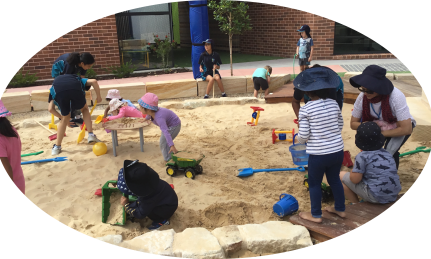
Parallel play transitioning to cooperative play was observed in the sandpit at St Luke’s CELC last Friday when we had some visitors from the older children from St Luke’s College. Initially, the younger children were hesitant and unsure of how to interact with the older children. It was interesting to watch the play behaviours develop over a short time period.

The interactions between the two groups of children began in the sandpit. The younger children sat beside me, watching the older children  and playing on their own, filling tip trucks with sand. One of the older children observed this interest and brought over a tip truck which he proceeded to fill with sand, another of the older boys came to assist. I prompted one of the younger children ” Where would you like the trucks to go?” Alex (*) responded ” On the track. It (the truck) needs to be empty over there!” (Alex lifted his hand and pointed towards the outer edge of the sandpit)

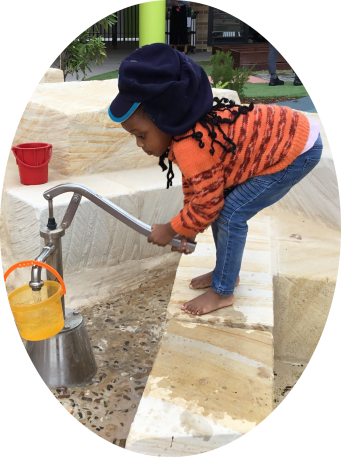
Alex’s suggestion inspired the older boys to create a track across the sandpit using spades. This action prompted more of the CELC children to join in the play. After watching the older boys build the track and filling his truck with sand, Alex left my side and went to assist the older boys. Keen to further extend the play, Alex showed his CELC peers how the tip trucks needed to be filled so the older boys could transport them across the track.  This play continued for another 15-20 minutes as the older and younger children cooperated together to fill the tip trucks, transport them across the sandpit track, then empty the trucks. More intricacies were added to the play as more children became involved, this included use of the water pump for truck washing purposes.

It could be said that the mathematical concepts of volume and mass were explored as the tip trucks were filled with sand and then water.  Scientific concepts of trial and error, hypothesising and the concepts of force and motion were also investigated through the use of the tip trucks and water pump.  What was most evident for me in this cooperative play in the sandpit, was communication and collaboration between all of the children (young and old.)

My role in the play in the sandpit began as a supportive role to reassure and  prompt the interactions between the younger and older children. The final role for me was onlooker and photographer, watching with a keen interest the inspiring interactions between the children.

Play was a conduit to facilitate the children’s interactions as they worked together to guide the direction of the play in the sandpit. The children respected and valued each other’s contributions, they engaged in turn taking in conversations, while exploring mathematical  and scientific concepts. The visit was a great success!

A big thank you to the children from St Luke’s who visited last week. We look forward to seeing you at St Luke’s CELC again soon.


*Name changed for privacy purposes

A Sense of Purpose

Navigating the journey continues as the finishing touches to St Luke’s Catholic Early Learning Centre (CELC) are made and we prepare for the teaching team to begin in January. The opening of St Luke’s Catholic Early Learning Centre (CELC) is fast approaching.  Christmas is only a week away but I still feel energised with a sense of purpose in planning the environment.

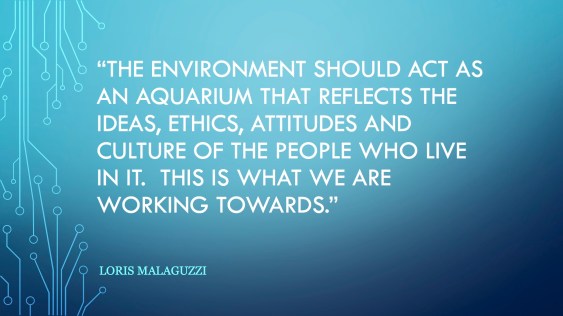
Setting up the learning galleries has prompted my reflection on the critical role of the environment for children’s learning and development. The set-up is still a work in progress, it will change many times (I’m sure) before families join us in February. Once again, I am drawn to the descriptions by educators of the Reggio Emilia approach whom refer to environment as the “third teacher.”

Presentation2.jpg

In reflecting on the planning of the environment at St Luke’s CELC, my sense of purpose is to support children’s voices in their learning, as well as to provide a sense of belonging to the teachers, children and families. The learning galleries will need to be fluid and responsive to their voices. It is important that children and teachers have a sense of ownership of their shared space and the experiences and learning that follows.

Underpinning the environment of St Luke’s CELC is play based learning. As described in the Early Years Learning Framework, play based learning is ‘a context for learning through which children organise and make sense of their social worlds, as they actively engage with people, objects and representations’ (EYLF, 2009, p. 46).

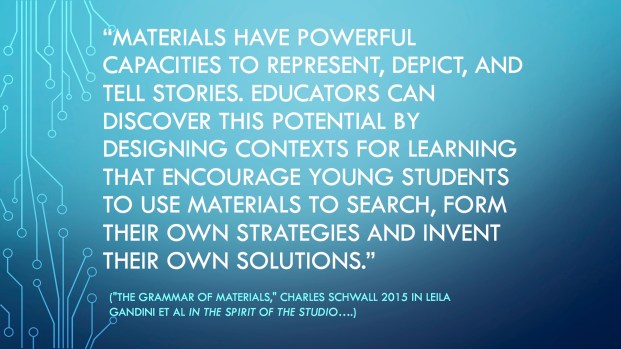
The children’s learning through play based experiences is supported via open ended materials where they can express their thoughts and ideas.

2Presentation2.jpg


My next point of reflection will involve the teaching team of St Luke’s CELC. Together we will reflect upon how to embed St Luke’s Pillars of Learning and St Luke’s CELC Philosophy into the environment and learning galleries. “Watch this space” as we inch closer to the opening of St Luke’s CELC

I have thoroughly enjoyed the final term of the school year at St Luke’s Catholic College which has continued to fulfil my sense of purpose in my professional journey.  It is inspiring to work alongside a supportive team who are professionally engaged, constantly striving to develop and grow alongside the students they teach.


Navigating the Journey

November for me is the traditional “wind down” period, with the end of the year in sight. My experience this year is different, I feel invigorated and renewed,  focused not on the “finish line” but on the journey ahead, filled with possibilities and potential.

I am in the privileged position to set up St Luke’s Catholic Early Learning Centre which will introduce families to the St Luke’s community and St Luke’s Pillars of learning, greatly influenced by Reggio Emilia – with a St Luke’s flavour.

In my professional journey in early childhood education, I have constantly strived to facilitate children’s active engagement in their own learning, to instil a love of learning. The pedagogy of schools in Reggio Emilia has always inspired me.  The child is seen with one hundred voices and is an active participant in their own learning.  Eloquently described here in an excerpt from the poem  ” The Hundred Languages: No way the hundred is there” by Loris Malaguzzi (founder of the Reggio Emilia approach.)

HundredQuote.jpg

The hundred languages of children and Reggio Emilia approach, guides me in my own professional journey, to facilitate a love of learning in children from an early age so they are actively involved throughout their learning journeys. Giving children a voice in their learning journeys.

The St Luke’s setting has many similarities with the schools of Reggio Emilia. The children are given a voice in their educational journey which is reflected in St Luke’s Pillars of learning.  Children are viewed holistically and the environments support collaborative learning through the furniture, design of learning galleries and open ended resources.  The children’s voice is reflected in the learning experiences and student led conferences.

1Quote.jpg

Over time, there has been a focus in early childhood settings and in the media on children’s transition to school and/or “school readiness.” Trudie Hill introduced me to the term “continuity of learning” for children’s preschool to school experience. I was drawn to this phrase as it reinforced my beliefs that rather than being taught “school readiness” skills in isolation, children’s skills, knowledge and learning dispositions develop continually from an early age and should continue throughout their school experience.

Children should be given a voice in their journey of learning, the teacher’s role is to facilitate children’s learning how to learn. This supports a child’s continuity of experience of learning. The pedagogy underlining the curriculum encompasses a supportive environment, learning experiences, scaffolded by experienced educators to develop a set of learning dispositions – a curiosity and wonder in the world around them to evoke a want to learn from St Luke’s Preschool through to post school and beyond.